This article was created with AI technology for the purposes of educating readers living in remote communities without convenient access to a physician or a physical therapist. The content of this article was reviewed before publication, by Canadian Orthopaedic Physiotherapist Terry Kane
The content in this article is not a substitute for seeing a licensed physician and readers are encouraged to see a physician or physical therapist as soon as possible if they experience increased pain.
The elbow is an important joint that connects the upper arm to the lower arm. It helps people bend, straighten, lift, throw, and carry objects. Because the elbow is used so often, it can easily become injured. Elbow injuries are common in sports, work, and daily activities. Some injuries happen suddenly after a fall or accident, while others develop slowly from repeated movements. Understanding these injuries can help people recognize symptoms and get proper treatment. Here are the top five elbow injuries and how they are treated.
1. Tennis Elbow
Tennis elbow is a condition that causes pain on the outside of the elbow. It happens when the tendons that attach the forearm muscles to the elbow become irritated or damaged from overuse.
Even though it is called tennis elbow, most people who develop this condition do not play tennis. It can occur from repetitive activities such as lifting, gripping, typing, using tools, gardening, or playing sports.
Common symptoms of tennis elbow include:
- Pain on the outside of the elbow
- Tenderness when touching the elbow
- Pain when gripping objects
- Weakness in the hand or forearm
- Pain when lifting, carrying, or twisting objects
- Difficulty opening jars or shaking hands
The pain may start gradually and become worse over time if the arm continues to be overused.
Healthcare professionals usually diagnose tennis elbow by asking about symptoms and examining the elbow, forearm, and wrist. Imaging tests are not always needed but may sometimes be used to rule out other conditions.
Many people recover without surgery. Treatment often includes resting from activities that cause pain, physiotherapy, stretching and strengthening exercises, and pain-relief strategies recommended by a healthcare professional.
Recovery can take several weeks or months, but most people improve with the right treatment and exercise program.
It is important to seek medical attention if elbow pain is severe, follows a significant injury, or if there is major weakness, swelling, or difficulty using the arm.
Remember: Pain on the outside of the elbow that gets worse when gripping or lifting objects may be a sign of tennis elbow. Early treatment and exercises can help reduce pain and restore normal arm function.
2. Golfer’s Elbow
Golfer’s elbow is a condition that causes pain on the inside of the elbow. It happens when the tendons that attach the forearm muscles to the elbow become irritated or damaged from overuse.
Even though it is called golfer’s elbow, most people who develop this condition do not play golf. It can occur from repetitive activities such as lifting, gripping, throwing, using tools, gardening, or playing sports.
Common symptoms of golfer’s elbow include:
- Pain on the inside of the elbow
- Tenderness when touching the elbow
- Pain when gripping or lifting objects
- Weakness in the hand or wrist
- Pain when bending the wrist or making a fist
- Numbness or tingling that may travel into the ring finger and little finger
The pain often develops gradually and may become worse if the arm continues to be overused.
Healthcare professionals usually diagnose golfer’s elbow by asking about symptoms and examining the elbow, wrist, and forearm. Imaging tests are not always needed but may sometimes be used to rule out other conditions.
Many people recover without surgery. Treatment often includes reducing activities that cause pain, physiotherapy, stretching and strengthening exercises, and pain-relief strategies recommended by a healthcare professional.
Recovery can take several weeks or months, but most people improve with the right treatment and exercise program.
It is important to seek medical attention if elbow pain is severe, follows a significant injury, or if there is major weakness, swelling, or difficulty using the arm.
Remember: Pain on the inside of the elbow that gets worse when gripping, lifting, or bending the wrist may be a sign of golfer’s elbow. Early treatment and exercises can help reduce pain and restore normal arm function.
3. Cubital Tunnel Syndrome
Cubital tunnel syndrome is a condition that occurs when the ulnar nerve becomes irritated or compressed at the elbow. The ulnar nerve runs from the neck down the arm and passes through a small space on the inside of the elbow called the cubital tunnel.
This is the same nerve that causes the “funny bone” feeling when you bump the inside of your elbow.
Common symptoms of cubital tunnel syndrome include:
- Numbness or tingling in the ring finger and little finger
- Pain on the inside of the elbow
- Weakness in the hand
- Difficulty gripping objects
- Clumsiness when using the fingers
- Symptoms that may be worse when the elbow is bent for a long time
People often notice symptoms when talking on the phone, sleeping with their elbow bent, or performing repetitive arm movements.
Cubital tunnel syndrome can develop from repeated bending of the elbow, leaning on the elbow for long periods, an injury, or swelling around the nerve.
Healthcare professionals usually diagnose cubital tunnel syndrome by asking about symptoms, examining the arm and hand, and sometimes ordering nerve tests or imaging studies.
Many people improve without surgery. Treatment may include avoiding activities that irritate the nerve, changing arm positions, wearing a splint at night, physiotherapy, and exercises recommended by a healthcare professional.
If symptoms are severe or do not improve, surgery may be recommended to reduce pressure on the nerve.
It is important to seek medical attention if numbness, tingling, or weakness is getting worse, or if the hand muscles begin to shrink.
Remember: Numbness and tingling in the ring finger and little finger, especially when the elbow is bent, may be signs of cubital tunnel syndrome. Early treatment can help protect the nerve and improve hand function.
4. Elbow Fracture
An elbow fracture is a break in one or more of the bones that make up the elbow joint. The elbow is where the upper arm bone meets the two bones of the forearm, allowing the arm to bend and straighten.
Elbow fractures are usually caused by a fall onto an outstretched hand, a direct blow to the elbow, a sports injury, or a motor vehicle collision.
Common symptoms of an elbow fracture include:
- Severe pain in the elbow
- Swelling around the elbow
- Bruising
- Difficulty bending or straightening the arm
- Tenderness when touching the elbow
- A visible deformity if the fracture is severe
Some people may also experience numbness or tingling in the hand if nearby nerves are affected by the injury.
Healthcare professionals usually diagnose an elbow fracture by examining the arm and using X-rays. In some cases, a CT scan may be needed to better understand the fracture.
Treatment depends on the type and severity of the fracture. Some fractures can heal with a splint, cast, or sling to keep the arm still while the bone heals. More serious fractures may require surgery to repair and stabilize the bones.
Recovery often takes several weeks or months. Physiotherapy or rehabilitation exercises may be recommended to help restore strength, flexibility, and normal movement after the fracture has healed.
It is important to seek medical attention right away if an elbow fracture is suspected, especially if there is severe pain, a deformity, numbness, or an inability to move the arm.
Remember: Pain, swelling, and difficulty moving the elbow after a fall or injury may be signs of an elbow fracture. Early treatment can help the bone heal properly and improve recovery.


4. Distal Biceps / Triceps Tear
A distal biceps or triceps tear is an injury where a tendon near the elbow is partially or completely torn. Tendons are strong tissues that connect muscles to bones and help the arm move.
The biceps tendon helps you bend your elbow and turn your palm upward. The triceps tendon helps you straighten your elbow.
These injuries often happen when lifting something heavy, catching a heavy object, falling, or during sports activities. Sometimes people may feel or hear a sudden “pop” when the tendon tears.
Common Symptoms of a Distal Biceps Tear
- Pain at the front of the elbow
- Sudden weakness when bending the elbow
- Difficulty turning the palm upward
- Swelling and bruising around the elbow
- A bulge in the upper arm where the muscle has pulled away
Common Symptoms of a Distal Triceps Tear
- Pain at the back of the elbow
- Difficulty straightening the arm
- Weakness when pushing or lifting
- Swelling and bruising around the elbow
- Tenderness at the back of the elbow
Healthcare professionals usually diagnose these injuries by examining the arm and using imaging tests such as ultrasound or MRI scans.
Treatment depends on the size of the tear and the person’s activity level. Small or partial tears may improve with rest, physiotherapy, and activity modification. Complete tears often require surgery to reattach the tendon to the bone.
Recovery may take several months. Rehabilitation exercises are important to help restore strength, movement, and function in the arm.
It is important to seek medical attention if there is a sudden loss of strength, a popping sensation during an injury, significant bruising, or difficulty moving the elbow.
Remember: Sudden pain, bruising, and weakness around the elbow after lifting or an injury may be signs of a distal biceps or triceps tear. Early assessment and treatment can help improve recovery and restore arm function.
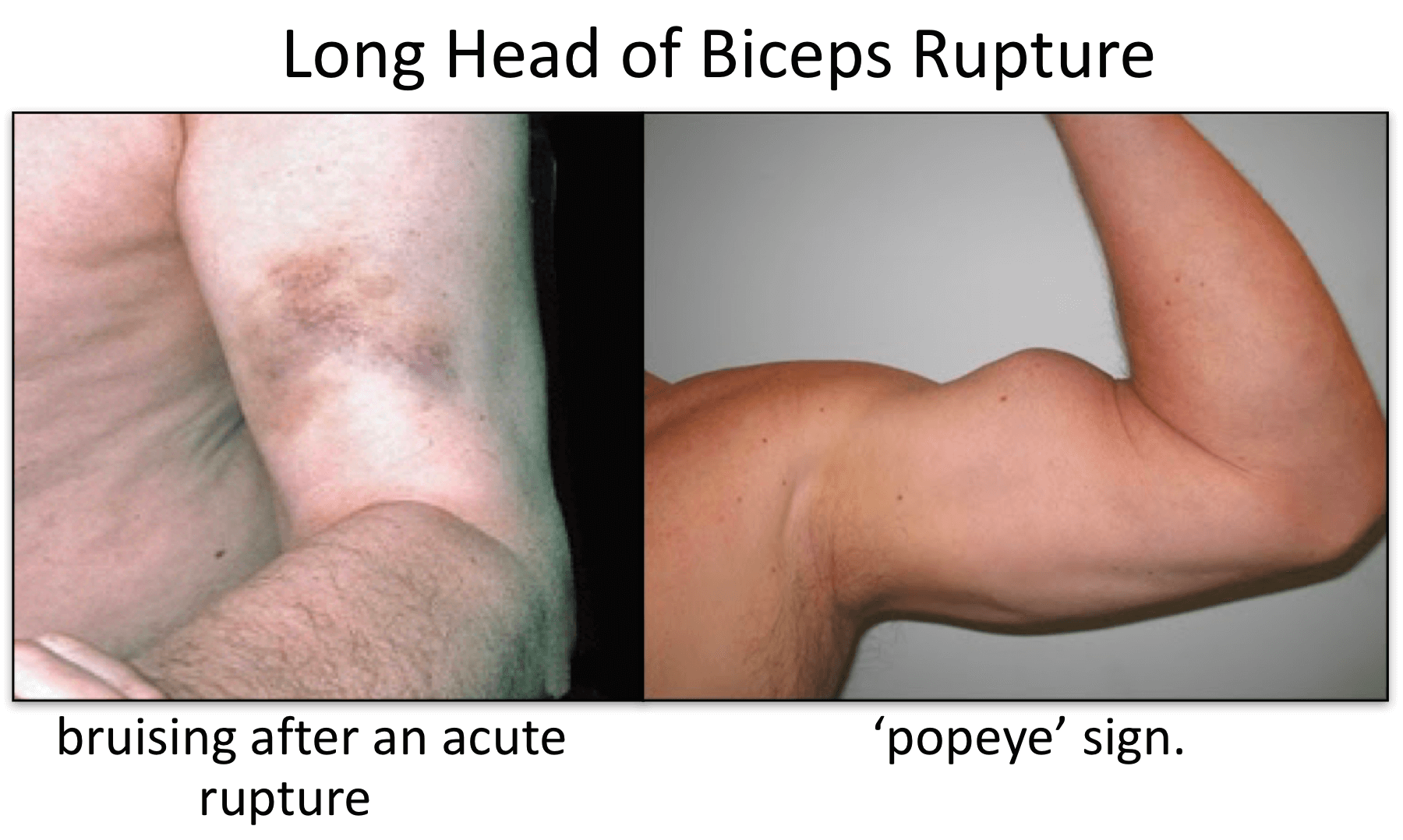
5. Proximal Long Head of Biceps Tear
Preventing Elbow Injuries
Many elbow injuries can be prevented by using proper techniques during sports and work activities. Warming up before exercise helps prepare the muscles and joints for movement. Stretching and strengthening exercises improve flexibility and stability. Taking breaks during repetitive tasks can also reduce stress on the elbow. Using proper equipment, such as supportive braces or sports gear, may help prevent injury.
People should seek medical care if elbow pain does not improve with rest or if swelling, numbness, or severe pain develops. Early treatment often leads to faster recovery and better results.
Conclusion
The elbow is a hardworking joint that allows people to perform many daily activities. Tennis elbow, golfer’s elbow, elbow dislocations, olecranon bursitis, and UCL injuries are among the most common elbow problems. These injuries can cause pain, swelling, weakness, and trouble moving the arm. Treatments may include rest, ice, medicine, physical therapy, braces, or surgery depending on the severity of the injury. By understanding these conditions and practicing injury prevention, people can protect their elbows and stay active.